Maintenance
Separations source guide: working a claim with no documents
Separations source guide for relationship timeline claims with no documents: how to rank the sources, work the claim, and record a failure to establish.
Most source guides assume there is a document somewhere and teach you to find it. This one starts from the opposite position, because in this category the usual answer is that no document was ever created.
This separations source guide works an undocumented subject: what each available source type actually supports, when to stop looking, and how to write down that you could not establish something. It applies to separations rows in a relationship timeline, where the entry usually rests on a report rather than a document, and it names public figures only where a court file already names them.
What to take away
- Rank the sources by what a reader could reopen, not by how confident they sound.
- A search that returned nothing has established nothing. Record the search so nobody repeats it, and do not convert it into a finding.
- "We could not establish this" is a publishable sentence and usually the correct one.
The ladder, for a subject with no floor
What it can support
- A court file in a separation or dissolution proceeding
- That a proceeding exists, its parties, its date, its stated status
- A first-party statement, retrieved from its own channel
- That a person said something, on a date, in those words
- A representative's on-record answer
- That the represented party's office said something, to you, on a date
- An outlet's report citing a named source
- That the outlet published that, attributing it
- An outlet's report citing nobody
- That the outlet published it
- Absence of appearances, posts or mentions
- Nothing
What it cannot support
- A court file in a separation or dissolution proceeding
- Anything about a relationship outside the filing
- A first-party statement, retrieved from its own channel
- That what they said is a complete account
- A representative's on-record answer
- Anything the answer did not address
- An outlet's report citing a named source
- The underlying claim, which is still one person's assertion
- An outlet's report citing nobody
- Nothing else at all
- Absence of appearances, posts or mentions
- Nothing
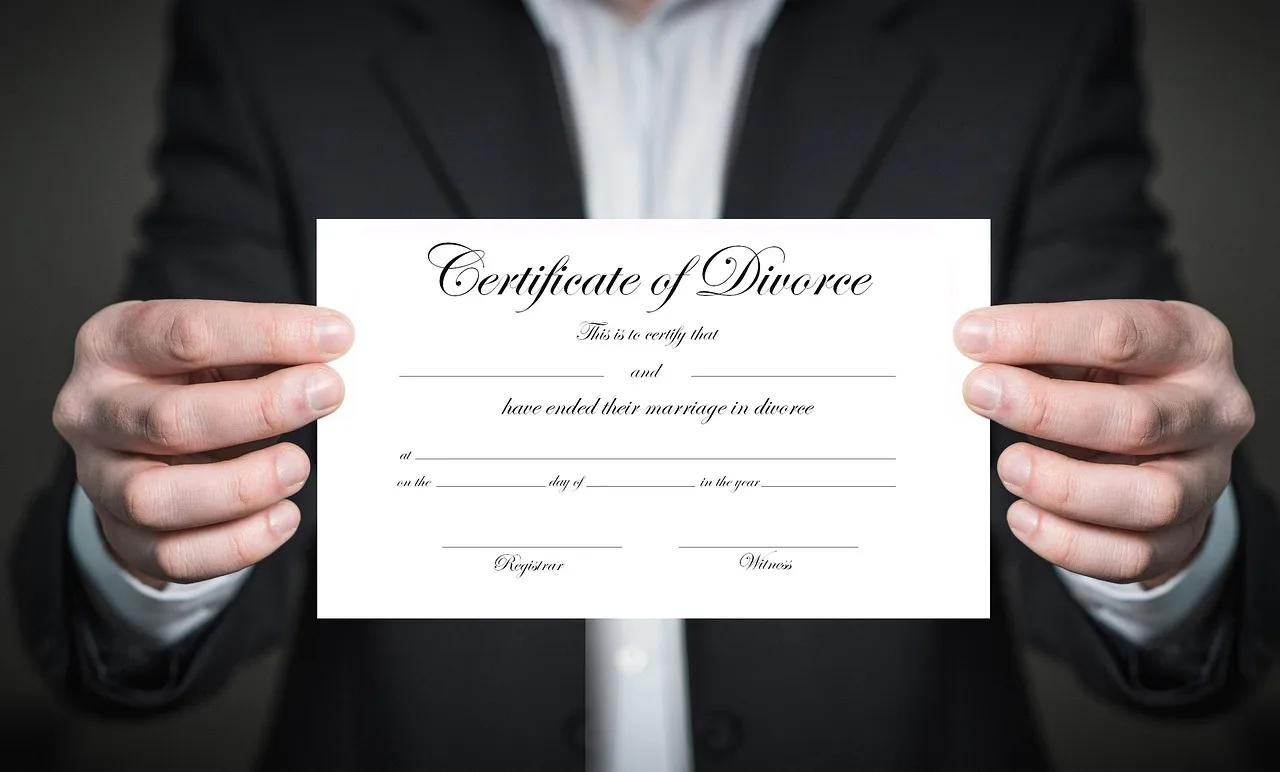
The top row is the only one with a documentary floor, and it exists only where a court is involved. The general treatment of divorce sets out how formal proceedings, including separation actions, differ from a private parting, and that difference is the difference between a row with a source and a row without one.
What each source can support
Source
- Court file
- Proceeding, parties, date
- First-party statement
- Person said it, dated
- Rep's on-record answer
- Office said it, dated
- Report, named source
- Outlet published, attributed
- Report, no source
- Outlet published it
- Absence of mentions
- Nothing
Supports
- Court file
- Relationship outside filing
- First-party statement
- Complete account
- Rep's on-record answer
- Anything unaddressed
- Report, named source
- The underlying claim
- Report, no source
- Nothing else
- Absence of mentions
- Nothing
Cannot support
- Court file
- First-party statement
- Rep's on-record answer
- Report, named source
- Report, no source
- Absence of mentions
Where a proceeding does exist, the record is designed to be locatable. The federal judiciary's guidance on court records explains how case files are held and reached, and state systems follow broadly similar shapes with local variations in access.
Federal court records are reached through PACER, the Public Access to Court Electronic Records system. State family-court rules govern access to state files. County clerk indexes are the usual entry point for state cases.
Why the bottom rows are worse than they look
The last two rows are not weak evidence. They are not evidence, and the distinction is practical rather than pedantic.
A claim with no named source cannot be weighed, because nothing about the person asserting it is available to weigh. A reader cannot ask how they would know. Neither can you. The general objection is the one that governs hearsay: a statement offered to prove what it asserts, made by somebody unavailable to be questioned about it.
Absence is not an observation. It fits every explanation, including mundane ones, and no one can check an inference drawn from it.
A separations entry in a celebrity relationship timeline often sits on those bottom two rows: a claim, no document behind it, and a date that looks firmer than it is. The ladder tells you which row you are looking at before you write it down.
The main guide to separations covers related cases.
Working an undocumented claim
- Write the claim in one sentence, with no hedging.
- List every source offered for it, in the order they appeared.
- Check the top row firsta court file in a separation or dissolution proceeding. Search PACER for federal cases and the state court portal or county clerk index for state cases.
- If no court file exists, check first-party channels, then representative answers, then named-source reports. If none provide a documentary floor, stop and record the search.
- Write the outcomethe failure-to-establish sentence, or the decision not to publish, with the checks that support it.
Example search log entry: 2021-05-03, King County Superior Court, Washington, query "Gates dissolution", result: case found. That file is the Bill and Melinda Gates dissolution, a state case, so federal PACER would not hold it. It is the row a reader can reopen: a named party, a court, a date, and a document.
A failure-to-establish sentence: "We checked PACER and the King County Superior Court portal for a dissolution filing between these parties and found none. We could not establish that a proceeding exists."
Working an undocumented claim
- Check any court file, record system and terms
- Ask named representatives on the record
- Trace report back to first appearance
- Look for a first-party statement
- Stop; no fifth move exists
The notes on finding a source cover related cases.
Writing down a failure to establish
This is the part most records skip, and it is the part that makes the next attempt cheaper.
Recording a failure to establish
- Searched system, terms, date, results
- Who was asked, what they said, when
- Earliest published appearance and its citation
- One sentence on the state of evidence
Some of that belongs on the page and some does not. Readers benefit from knowing a claim was checked and could not be established. They gain nothing from a catalog of its details assembled only to say it is unsupported.
The rule that keeps a record from publishing a claim in the act of dismissing it: state the claim once. State what was checked. State that nothing was found. Do not repeat the claim as a headline or a summary. A dismissal is not proof of falsity. The notes on unverified claims cover related cases.
Deciding not to publish, in writing
A decision not to publish should be as documented as a decision to publish, and for the same reason: the claim will come back.
What a no-publish log holds
- The date
- The claim in one line
- Sources offered
- Checks run
- Reason for stopping
Keep the date, the claim in one line, the sources offered, the checks run, and the reason for stopping. When the same material recirculates in a year, the note answers in a minute, not a day. It prevents a new editor from reaching a different conclusion with less information.
The log should hold the public claim, the public record, and the checks run. It should not hold private contact details, unverified tips, or speculation about third parties. The notes on what a record should hold cover related cases.
Common questions
Is a court file always public in a separation proceeding?
No. Access varies by jurisdiction and by what has been sealed or restricted, and family matters are among the most commonly restricted. Check the court's own rule rather than assuming either way.
Several outlets carry the claim independently. Does that count?
Only if they are independent, which has to be shown rather than assumed. Independence means separate underlying sources, and tracing back is the only way to find out. The usual finding is one item and several repetitions.
Can a page say that a claim is false?
Only with evidence that it is false, which is a separate research problem from failing to establish that it is true. Most of the time the accurate statement is that nothing supports it, and that sentence should be written rather than upgraded.
Should the search terms really be recorded?
Yes. A negative result depends entirely on what was searched, and a note saying nothing was found is worthless without it. It also stops a future editor from believing a system was checked when a different one was.